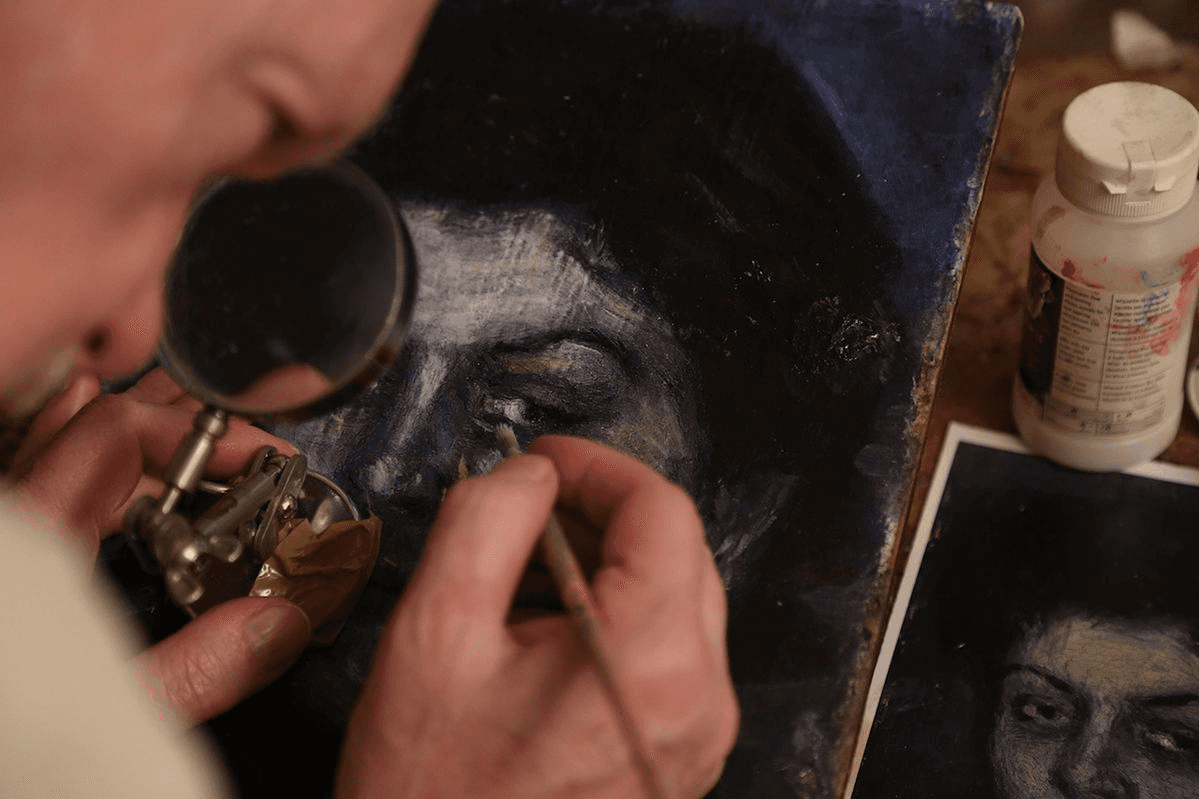


(30/4/26) Greece Introduces New Art Unit to Crack Down on Forgery
(30/4/26) Greece Introduces New Art Unit to Crack Down on Forgery
The Doodler News
The art market has always been a puzzling place.
From debating the value of a price to measuring the worth of an artist's work, there are few things more subjective than art dealings. But beneath that romanticism lies a much darker undertone - an industry built on fakes and forgery. In fact, forgeries account for roughly 40-50% of all art in circulation currently. Commonly forged artists are often the most renowned - Van Gogh, Modigliani, Pollock, Warhol and Vermeer.
In the age of digitalization and the rapid changing landscape of the art world, fake pieces are easier than ever to circulate. Online art sales have risen exponentially, regulation hasn't kept up and art crime is increasingly international and organized.
This growing crisis pushed Greece, early this year, to act. Greece recently passed a substantial new law targeting art crime; one of the country’s most serious efforts yet to protect its cultural heritage. This specialized unit, within the nation's Ministry of Culture, has been specifically tasked with managing and dealing with art forgery, illegal trafficking of artworks and antiquities, and the vandalism of cultural property. Before this, all art crimes were simply treated under general fraud laws - not a distinct, separate category like this.
This legislation delivers heavy prices to offenders - fines up to €300,000 and prison sentences of up to 10 years. Authorities no longer need to prove a crime occurred - creating a fake artwork, owning one with intent to sell and falsifying records are enough to face prosecution. Furthermore, a new interesting development in combating art forgery is the introduction of a national registry of forged works, which records known pieces, prevents them from being sold and improves transparency.
This comes after a rise in forgery scandals, including a 2024 forgery ring producing fake artworks in multiple studios. Based in Thessaloniki, Greece's second largest city, the operation involved 3-5 workshops producing fake works, and a 'front' gallery/auction setup. These fakes were falsely attributed renowned modern German artists, from the likes of Alekos Fassianos to Nikos Hadjikyriakos-Ghikas. A whopping total of 123 fake artworks were seized in the main raid, with a suggested €300,000–€400,000 in illegal sales from just one planned auction. In a nutshell, this case was a wake-up call - forgery is industrial now.
However, every law has its limits. For example, art crime occurs across borders. These forged works could easily be sold in New York, London or Hong Kong. Even if Greece does double down on art forgery locally, the market is global. Furthermore, the new law allows punishment for: simply possessing a fake with intent to sell or creating a work “in the style of” if it crosses a line. This can raise concerns for students and emerging artists. Where does the line blur between inspiration and imitation? When does influence become illegal?
Even as Greece tightens its grip on forgery, the problem resists simplicity. The question is not whether fakes and forgeries can be stopped. It's more about whether the system that enables them - can be controlled.