

Hearing Blue - On Synaesthesia
Hearing Blue - On Synaesthesia
Philip Dominic
Feeling. It's something that everyone takes for granted. A large part of being human is having the 5 senses. But what happens when it all gets mixed up? Confusion racks up and washes over you as you question your feelings, your senses. What makes you, you. This is what 4.4% of the world's population experience with synesthesia. Seeing blue when hearing the strum of a violin. Feeling a bee buzzing against your skin when tasting a delicious sweet. This stimulates the senses and increases the artistic vision in many people, in many different ways.
It doesn’t take long to find artists with synesthesia. For Melissa McCracken, sound translating into color had always been a normal part of her life. “It’s interesting how natural I assumed it was”, she said in an interview with American lifestyle. “It just seemed natural to have a music video in my head”. She creates abstract works based on the colours and patterns that appear in her head when listening to pop culture music. Some of her most notable works include Diamonds, Comfortably Numb, and Otherside.
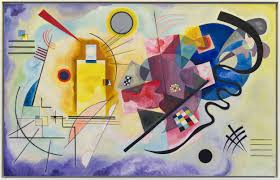
The awe-inspiring combination of artists and synaesthesia is not limited to the contemporary. Vincent Van Gogh, who painted in a flowy, almost lyrical style, is thought by art historians through a similar type of synaesthesia to Melissa McCracken, where he associated many sounds with colours. In a letter to his brother, he compares artists with shaky hands of having a style “something of the sound peculiar to a violin”. Another, more obvious example, was Wassily Kandinsky, who named his works after several musical references and was himself a musician, playing the cello. His works and their relation to music and the psychology of music are studied by artists and musicians likewise around the world today.
When you look at Van Gogh’s works, the strokes paint a brilliant picture, similar to how music notes compose a melody. It has often been commented that his works have an almost flow-like style to them, similar to how a river gently washes over a bank. The calming way these artworks are stylised tend to calm viewers and allow them to appreciate the nuances of the art. Kandinsky’s follows an entire different style. His works have much geometry, shapes, lines, etc, along with colour. He also tends to call most of his artworks compositions, a nod to his probable source of inspiration. The abstract nature of these pieces mimic the quick paced, tense style of classical music pioneered by Beethoven, with lots of philosophy and meaning hidden behind the circle's and colour. The comparison could not be more contrasting, showing just how varied similiar artists can get, even with the exact same condition that fuels the inspiration for both.