

Neuroplasticity: An Essay
Neuroplasticity: An Essay
Aditya Navin
“Any man could, if he were so inclined, be the sculptor of his own brain.”
― Santiago Ramon y Cajal, Advice for a Young Investigator
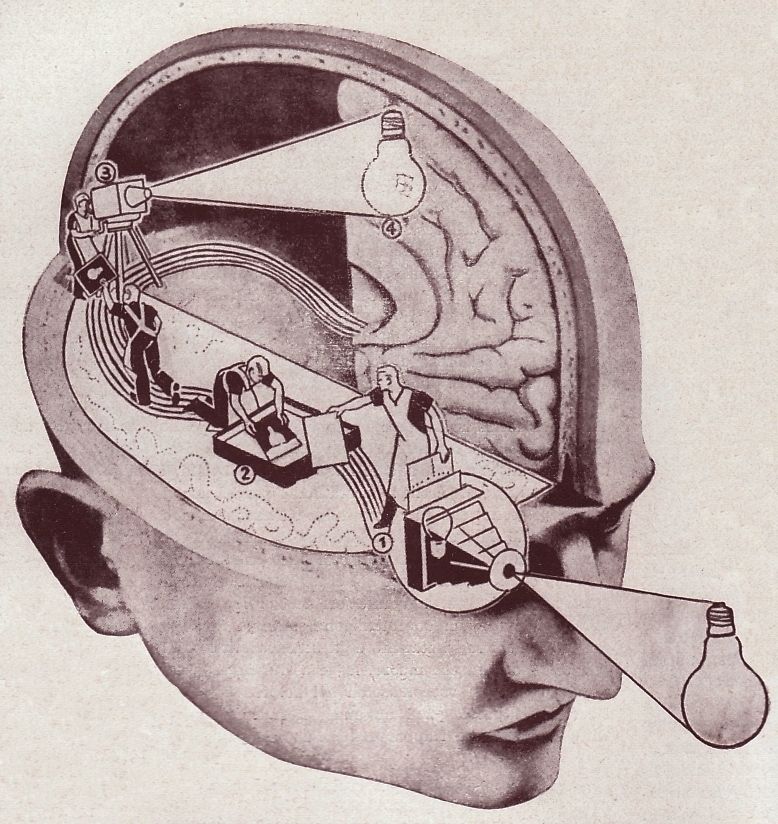
The idea of sculpting your mind is an alluring prospect, to me and to many others. For though we pride ourselves over the concepts of free will and individuality, we are still biological organisms. Our brain is living tissue, able to shape and redesign itself, altering itself based on experiences and injury – a process known as neuroplasticity.
Although neuroplasticity’s acceptance is a relatively new development, accepted in the mainstream scientific world in the 1970s, it was proposed and explored in multiple fields, notably psychology and evidently, neuroscience. It can be first traced back to 1793, when Italian anatomist Michele Vincenzo Malacarne showed how learning and training could improve the size of the cerebellum in animals. In the late 19th century, psychologist William James applied the term ‘plasticity’ to behaviour, and neuroscientist Santiago Ramón y Cajal argued that the adult brain could undergo structural alteration. This was debated in psychology as well. As Sartre* argued, “Man is nothing else, but what he purposes... he is therefore nothing else but the sum of his actions." This statement is supported by neuroplasticity – repeated actions physically re-wire the brain, literally reforming an individual into the sum of his actions.
Personally, I am reminded of the concept of neuroplasticity when I play the piano, a practice that can only be defined as a workout for the brain and, as Camus defined music, ‘a navigator through the absurdity of existence.’ Long-term piano training results in structural changes in the brain, specifically increasing the amount of grey and white matter, and increases the size of the corpus callosum, a nerve tract that facilitates coordination between the right and left hands. These improvements spread out to other fields too – as a beginner becomes more skilled, they can perform tasks with higher cognitive loads with ease. Fundamentally, the mind adapts to perform complicated tasks without difficulty.
Neuroplasticity presents us all with an opportunity to reform and revise our perceptions of ourselves – our abilities, our thoughts and even our identities. The concept of neuroplasticity and its benefits vary across individuals – it can serve varying purposes. I, personally, tend to limit my mind, to try to fit everything into an organizable box, disregarding the messiness of human life. I often fall into the trap of believing that my intelligence, talent and abilities are subpar, are unable to change and are rather innate and static qualities I am powerless as to improving – often called a fixed mindset. But neuroplasticity offers hope – it proves that our intelligence and abilities are not fixed. Simply believing in neuroplasticity physically rewires the brain, improving cognitive resilience and flexibility. The Neuroplasticity Project, an initiative by the National Institute of Health (NIH) investigates how the brain develops at a cellular level. These studies show that understanding that the brain changes and improves with effort shifts the mindset of an individual from, ‘I can’t do this’, to ‘I can’t do this yet’. Our research in neuroplasticity shows that failures are not reflections of flawed beliefs or intelligence, but opportunities and signals for the brain to rewire, refining itself every day.
And so I leave you with this – we have the potential to truly change ourselves for the better. Neuroplasticity shows us that our thoughts are not limited to the wanderings of the mind – our experiences and thoughts crystallize into habits and personality – we are truly what we believe. We do not live the sorrowfully lives of Cioran’s statues – rather, we are clay, free to sculpt ourselves into the principal versions of ourselves.